

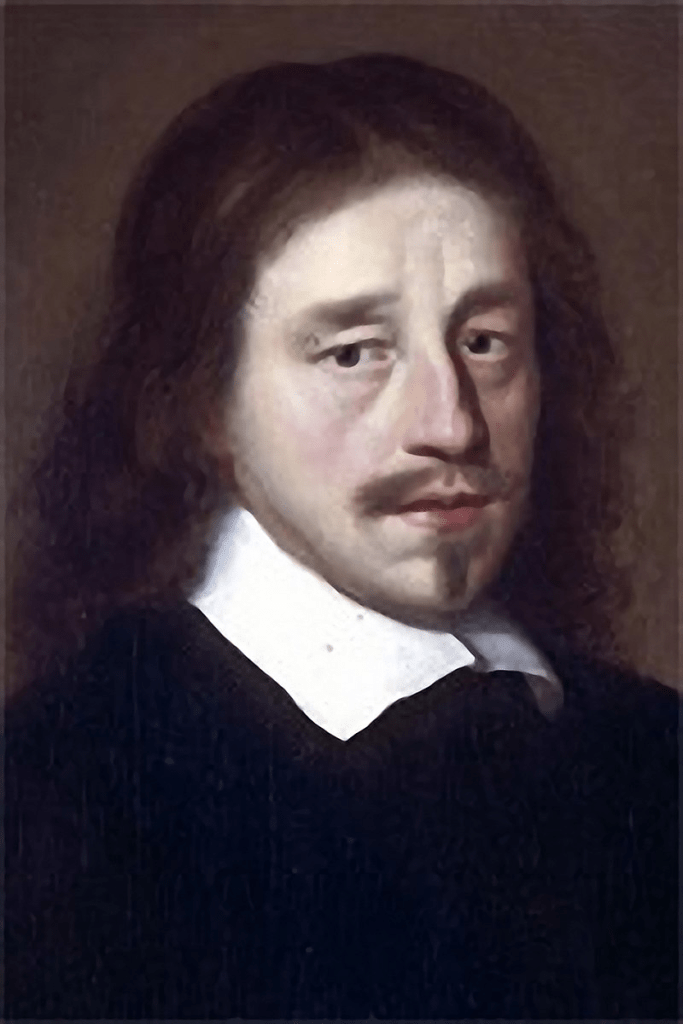
Translated from Chapter 15 – De Necessario et Contingente, Idea Metaphysicae Generalis et Specialis
The term “Necessary” [Necessarium] or “Necessity” [Necesse] is generally defined as that which cannot not be. Necessity can be considered either in language or in things. The necessity of language [Necessitas orationis] denotes an indissoluble connection between the predicate and the subject, just as the contingency of enunciation indicates the dissolubility of those parts of the sentence: the necessity and contingency of enunciation are based on the necessity and contingency present in things. Thus, a statement such as “man is an animal” is said to be necessary because this predicate, “animal,” is necessarily joined to the subject. The necessity of language pertains to logic: the necessity that exists in things is the concern of this discussion.
“Necessity in things” [Necessitas in rebus] signifies that a thing cannot not be or cannot have its existence otherwise. “Contingency” [Contingentia], on the other hand, implies the possibility of non-existence or the possibility of having a different state. Every being is either necessary or contingent because anything can either not exist or cannot not exist, given that these terms are contradictory opposites.
“Necessity in things” varies and can be divided into internal and external. “Internal necessity” pertains to the intrinsic nature of a thing. According to this [kind of] necessity, something is called either “absolutely necessary” or “necessary in a qualified sense” [Secundum hanc necessitatem aliquid dicitur, vel absolute necessarium, vel secundum quid]. “Absolute necessity” [Absolute necessarium] implies a contradiction in its non-existence. If we consider the absolute necessity of a thing in terms of existence, it is either attributed to the thing itself considered in its simplicity or because of something to which it is necessarily joined.
In the former sense, only God is necessary for existence, and all creatures have contingent existence. Since God, the Most Perfect, depends on nothing, He cannot not exist, indeed, He cannot even be conceived as possibly not existing. However, the existence of God is of His Divine essence. Creatures, on the other hand, can be annihilated by God and thus not exist, given that they were not always in existence; consequently, their existence is contingent.
In the latter sense, necessity applies to genera, differences, and proprieties if species are given, and to species if individuals are posited. Even though something may not be absolutely necessary in itself, such as giving animality, rationality, and risibility, it becomes necessary absolutely, presupposing that man is given. Similarly, man must be given if Adam or Peter is given. The reason for this is that genera and differences differ not in reality but only in reason from species, just as species differ from individuals. Proper properties, strictly so-called, demand reciprocity with their subjects. This includes the necessity of the parts of an essential and integral whole, for the nature of the whole requires and indicates a composition of parts. Thus, it is necessary to give a soul and body if man is given, and to give certain integral parts of the human body, namely the principal ones, presupposing that the human body is given.
I call “necessary in a qualified sense by internal necessity” [Necessarium secundum quid internâ necessitate] here that which cannot naturally be otherwise but can supernaturally be otherwise. Therefore, it is not absolutely necessary. For example, it is necessary for the sun to rise every day in this way. What is necessary in this manner is absolutely contingent because it can happen otherwise.
“Necessity by external necessity” [Necessarium necessitate externâ] is said to be that which, due to some external factor, cannot be otherwise. Therefore, it is said to be necessary by hypothetical necessity, which does not make the thing necessary in itself but implies a necessary connection between the thing and a hypothesis or condition. According to this necessity, things are said to necessarily happen if God decreed, foreknew, or predicted them. For example, it was necessary for the Israelites to be liberated from Egyptian servitude, and it was necessary for Christ to suffer, and so on. In themselves, these things were contingent; they could happen or not happen. However, due to this external necessity that God had decreed them, they necessarily had to happen.
From this, it is evident that the contingency of secondary causes does not overturn God’s decree or foreknowledge. Things that happen contingently concerning proximate and secondary causes necessarily happen concerning God. Nevertheless, they do not cease to be contingent to become necessary because this external necessity does not change the internal nature of things. Just as hypothetical necessity, by which a thing, once it exists, is necessarily so, does not eliminate contingency, neither does this external necessity. Alternatively, just as someone’s vision does not make the object seen necessary by changing the nature of contingency into necessity, although hypothetically it is necessarily given what is seen, similarly, this external necessity does not alter the internal nature of the thing. I will illustrate this with an example: I see two people fighting, who are fighting contingently; assuming that I see this, they necessarily fight. However, my vision does not make their fight in itself necessary.
External necessity also includes necessity concerning the past. Thus, whatever is past or was, cannot not have been, given that it was, even though, considered in itself, it is contingent as it could not have been. This also pertains to the necessity of means to achieve an end, obtained through those means. However, a certain diversity must be observed here: some means are such that the end cannot be obtained without them, as faith is necessary to please God; others are not so necessary for obtaining the end, but the end can be achieved without them, although not as easily, conveniently, or expeditiously. For example, a horse is necessary for completing a journey. And if several means present themselves, through any of which the end can be acquired, it is not necessary to determine this means; it is sufficient if either this or another is given.

 The Southern Pulpit